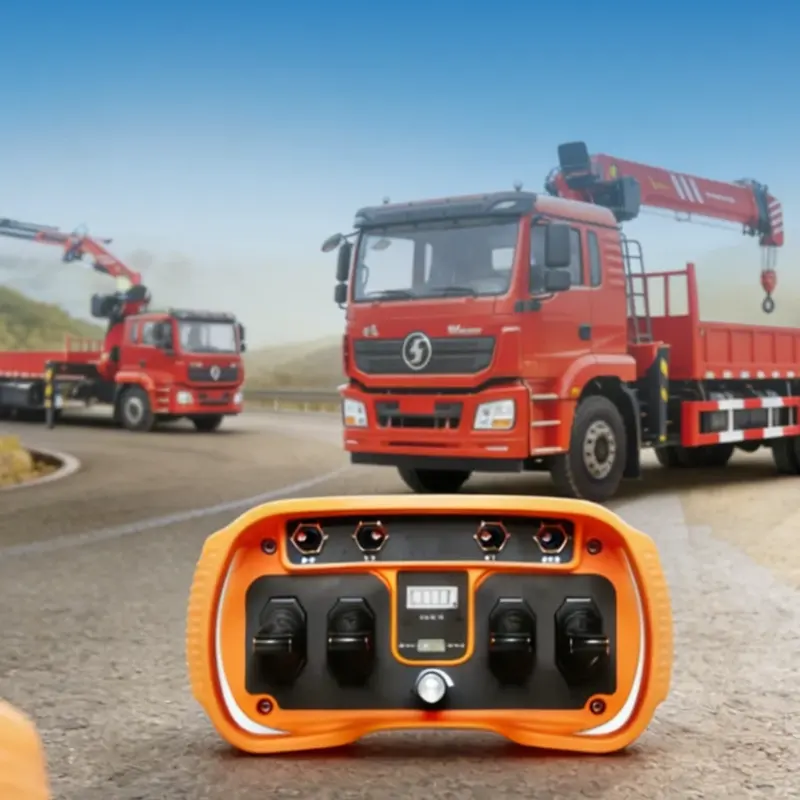
Remote Control vs Traditional Crane Operation: Which Is Better for Truck Mounted Cranes?
Release time: 2026-10-08
Table of Contents
Truck mounted cranes are often used in environments where operators need to balance lifting performance, visibility, and safety. At AHHFSW Crane, these requirements are especially relevant when customers are selecting crane accessories, replacing an existing control system, or upgrading an older truck mounted crane. Traditional crane operation remains practical for many jobs, but it is not always the most convenient option, especially on busy construction sites or in areas with limited working space.
A جهاز تحكم عن بعد changes the way operators interact with the crane. Instead of staying beside the equipment throughout the operation, the operator can control key functions from a more suitable position. This can make it easier to observe the load, communicate with other workers, and adjust the operating position as site conditions change. The important point is not that one method is always better than the other. The right choice depends on the crane, the job site, and how the equipment is used.
Operating Position and Visibility
One of the biggest differences between traditional operation and wireless control is where the operator can stand during lifting work. With conventional controls, the operator may have a relatively fixed working position. Depending on the truck layout and crane configuration, this position may not provide the clearest view of the load or surrounding area.
A جهاز تحكم لاسلكي عن بعد للرافعة gives the operator more freedom to choose a practical position within the system’s operating range. This can be useful when the load is being moved around obstacles, when several workers are working around the truck, or when the operator needs a better view of the lifting area. Instead of focusing only on staying at the control station, the operator can pay closer attention to the load path and surrounding environment. That flexibility can be particularly valuable during repetitive lifting work where positioning and visibility have a direct effect on how smoothly the job progresses.
Control Response and Lifting Efficiency
Control response is another factor worth considering. Crane movements such as lifting, lowering, slewing, boom extension, and winch operation often require timely commands. When an operator needs to make frequent adjustments, even small delays can make the operation feel less responsive.
ال Durable Wireless Remote Control For Cranes Precise Control uses 433 MHz frequency, GFSK modulation, and PLL frequency control. Its listed transmitter command response time is below 100 ms, while the stop command response time is also below 100 ms. The system has a listed operating distance of up to 100 meters, giving operators more flexibility when working around a truck mounted crane.
Response time is only one part of the picture, however. Signal stability, receiver sensitivity, operating distance, environmental protection, and compatibility with the existing crane all matter when selecting a control system. Looking at these factors together gives buyers a better idea of whether a remote solution is suitable for their actual lifting conditions rather than relying on a single specification.
Working in Different Job Site Conditions
Construction sites rarely stay perfectly organized. Trucks may operate in narrow areas, around buildings, near material storage zones, or alongside other equipment. In these situations, having more flexibility over the operator’s position can make everyday crane operation easier.
Environmental conditions also matter. Outdoor lifting equipment may be exposed to dust, splashing water, changing temperatures, and frequent handling. A remote control intended for this type of work should therefore be designed for more than basic indoor operation.
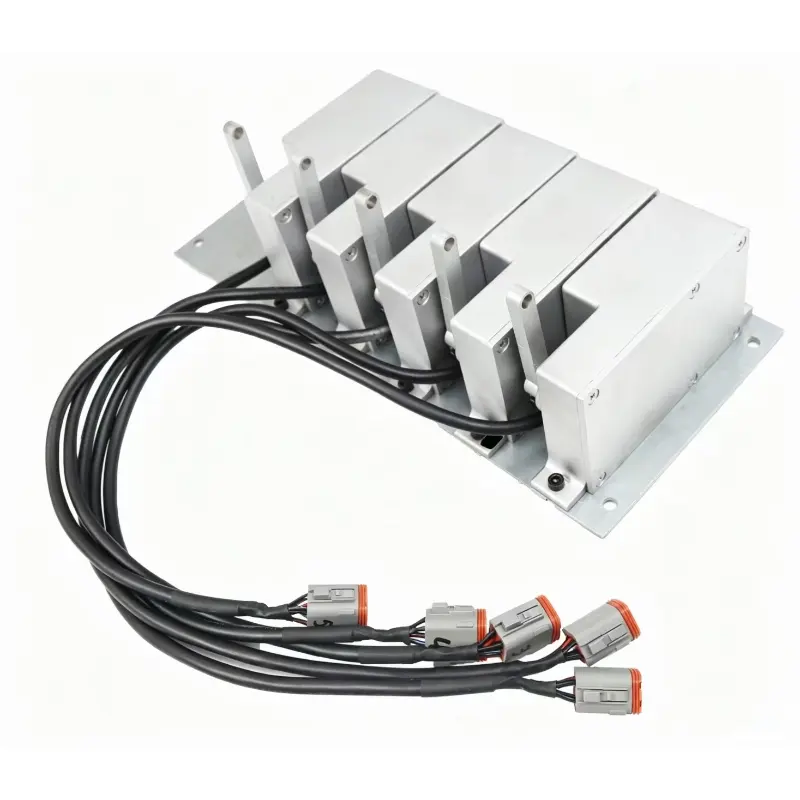
The product has an IP65 rating and a listed operating temperature range of -10°C to +75°C. Its receiver housing uses aluminum alloy, while the transmitter uses a PA6 housing reinforced with 30% glass fiber. These details are useful when comparing control equipment for demanding working environments. Rather than choosing a remote simply because it is wireless, buyers should consider whether its protection, temperature range, signal performance, and construction match the actual job site.
Choosing the Right Control System for a Truck Mounted Crane
Not every truck mounted crane needs the same control arrangement. A crane used for occasional material handling may have different requirements from one working every day on construction sites. Before choosing a remote system, buyers should consider the crane model, hydraulic functions, required control distance, operating environment, and functions that need to be controlled.
Compatibility is especially important. A remote control may need to operate functions such as boom extension, slewing, lifting, and winch operation. The control system should therefore match the crane’s existing configuration rather than being selected only by appearance or price.
This wireless remote control system is designed for both straight-boom and knuckle-boom truck mounted cranes. It is stated to be compatible with mainstream brands including SANY, XCMG, and Furukawa UNIC. For buyers replacing a faulty system or upgrading an existing crane, confirming the crane brand, model, control functions, and connection requirements before ordering can help avoid unnecessary modifications and installation problems.
Remote Control as a Practical Upgrade
For owners of existing truck mounted cranes, changing the control system does not always mean replacing the entire machine. A suitable remote control can be considered when the original system becomes unreliable, when operators need greater flexibility, or when the crane needs to be adapted to changing working conditions.
The value of an upgrade should be measured against the actual operation. If the existing controls already provide good visibility, convenient access, and reliable operation, there may be little reason to change them. On the other hand, if operators frequently need to move around the work area or struggle to maintain a clear view of the load, remote operation can offer a practical improvement.
The product also supports throttle control as an optional function, with an electronic throttle available separately. This gives buyers another point to consider when evaluating how a remote system can fit into their existing crane setup. For older equipment, the key is to confirm the required functions and connections before purchasing rather than assuming every universal remote system will work without adjustment.
Which Option Makes More Sense?
Traditional crane operation still has a place, particularly when the operator’s position provides a clear view and the existing control system works reliably. It can be straightforward, familiar, and suitable for many routine lifting applications.
Remote operation becomes more attractive when flexibility, visibility, and operator positioning are important. It can be especially useful for truck mounted cranes working in crowded construction areas or situations where the operator benefits from observing the load from a different position.
Ultimately, the decision should come down to the actual job rather than simply choosing the newer technology. Buyers should look at control distance, response time, environmental protection, crane compatibility, required functions, and installation requirements together. For operators looking to replace an unreliable control system or improve the flexibility of an existing truck mounted crane, a properly matched wireless solution can be a practical upgrade.
A Practical Remote Control Solution from AHHFSW Crane
For buyers considering a remote control upgrade, the most important step is matching the control system with the actual crane configuration. AHHFSW Crane provides crane accessory solutions for different truck mounted crane applications and can help buyers evaluate requirements such as crane brand, operating functions, control distance, and installation compatibility.
The Durable Wireless Remote Control For Cranes Precise Control is one option for customers looking for stable wireless operation, with support for boom extension, slewing, lifting, and winch functions. With a 100-meter listed control distance, IP65 protection, fast command response, and compatibility with SANY, XCMG, Furukawa UNIC, and other mainstream truck mounted cranes, it can be considered for both replacement and equipment upgrade projects. Buyers can contact AHHFSW Crane to confirm the specific configuration before placing an order.
التعليمات
What is the main benefit of using a remote control on a truck mounted crane?
It gives the operator greater freedom to choose a suitable operating position while maintaining control of key crane functions.
What is the control distance of this wireless remote control?
The listed remote control distance is up to 100 meters for both the transmitter and receiver specifications.
Is this remote control compatible with SANY and XCMG cranes?
The product is stated to be compatible with SANY, XCMG, Furukawa UNIC, and other mainstream straight-boom truck mounted cranes. Compatibility should still be confirmed according to the specific crane model and configuration.
What crane functions can the remote control operate?
The system is designed to support boom extension, slewing, lifting, and winch functions. Optional throttle control is also available.