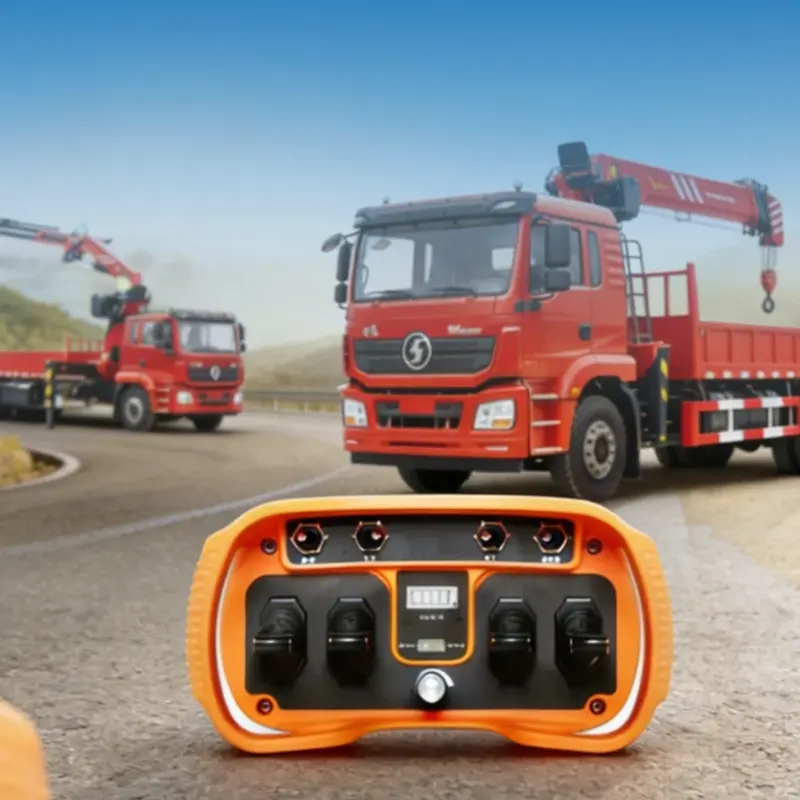
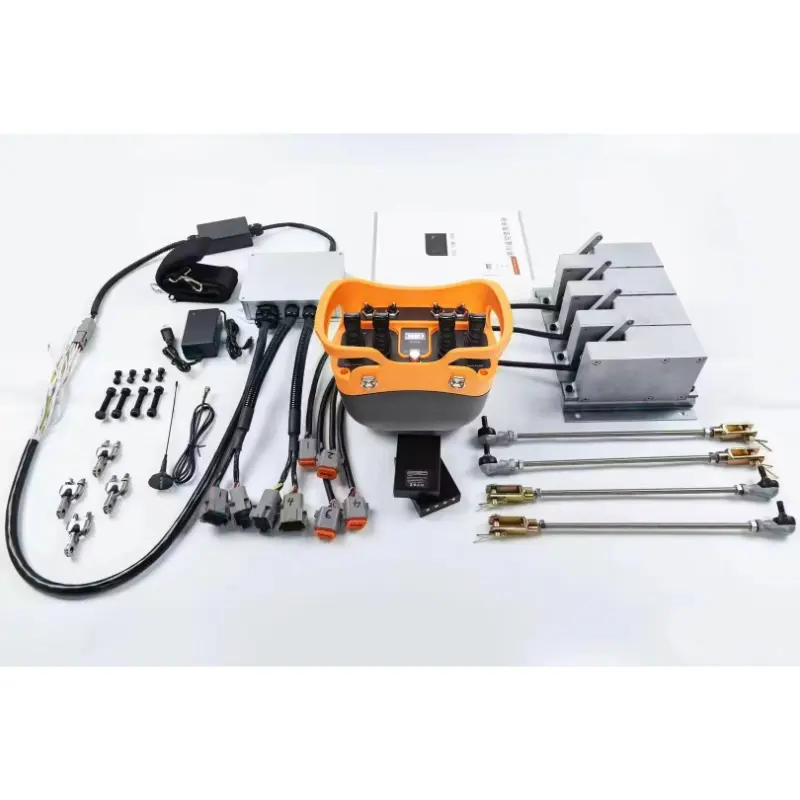
Wireless Remote Control Features You Should Never Ignore When Buying
Release time: 2026-07-03
Table of Contents
The global marketplace for industrial equipment is flooded with aftermarket remote systems. To an untrained eye, a $200 unit might look functionally similar to a $2,000 industrial-grade system. However, the internal architecture, safety redundancies, and ergonomic engineering are vastly different. When tasked with procuring equipment that controls machines capable of lifting 50 tons over the heads of workers, choosing a basic toy over a professional tool is a liability hazard.
Among the myriad of crane remote control features available, purchasing managers and engineers must learn to distinguish between flashy marketing gimmicks and non-negotiable engineering standards. Investing in a reliable safety remote control is not just about moving a hoist; it is about guaranteeing absolute command reliability in worst-case scenarios. This guide details the critical features that must be explicitly verified during the B2B procurement process.
Uncompromising Safety and Compliance Architectures
The most critical feature of any lifting interface is not how it moves the load, but how reliably it can stop it.
- Active vs. Passive Emergency Stop (E-Stop): A cheap remote uses a passive E-stop; it only sends a “stop” signal when pressed. If the remote loses power or signal, the crane might continue its last commanded motion. Industrial-grade units utilize Active E-stops. The transmitter and receiver maintain a continuous “handshake” (often every 20-50 milliseconds). If this handshake is broken—due to button press, battery failure, or interference—the receiver immediately defaults to a safe, stopped state.
- Certified Safety Integrity: Procurement documents must demand proof of certification. The E-stop circuitry must be certified to ISO 13849-1 Performance Level d (PL-d) or IEC 61508 Safety Integrity Level 3 (SIL 3). This ensures that the internal relays have hardware redundancy, preventing a single internal short-circuit from causing a runaway crane.
Advanced Frequency Agility and Anti-Interference
In a modern smart factory filled with Wi-Fi networks, Bluetooth devices, AGVs, and heavy electrical noise, a fixed-frequency remote will suffer from continuous dropouts, halting production.
- Frequency Hopping Spread Spectrum (FHSS): You must never ignore this feature for busy environments. FHSS technology automatically and continuously changes the radio channel (hopping) multiple times per second across a wide band. If it encounters interference on one frequency, it immediately hops to a clear one, ensuring the operator’s commands are never delayed or lost.
- Automatic Channel Scanning: Upon startup, advanced receivers scan the local RF environment to lock onto the cleanest available frequency band before permitting crane operation, establishing a robust communication baseline.
Ergonomics, Control Precision, and Durability
The physical design dictates operator efficiency and long-term hardware survival.
- Proportional (Stepless) Control: For precision tasks like mating heavy machine parts or pouring molten metal, simple 1-speed or 2-speed buttons are inadequate and cause jerky movements. Proportional joysticks or trigger buttons allow the operator to vary the speed of the crane smoothly, from a micro-crawl to full speed, depending on how far the control is pushed.
- Ingress Protection (IP66/IP67 Minimum): Industrial environments are wet, dusty, and dirty. The transmitter housing must be sealed. An IP66 rating ensures protection against heavy water jets (like power washing), while IP67 guarantees the remote can survive temporary submersion if dropped in a puddle or vat.
Feature Prioritization Matrix
When issuing a Request for Proposal (RFP), use this matrix to evaluate vendor bids.
| Feature Category | Non-Negotiable (Must-Have) | Highly Recommended (Application Dependent) |
|---|---|---|
| Safety | PL-d / SIL 3 Certified E-Stop | Fall/Tilt detection (shuts down if operator drops it) |
| Communication | FHSS or robust channel auto-scanning | Bi-directional communication (LCD feedback screen) |
| Power | High-capacity Lithium-ion battery | Hot-swappable batteries / Induction charging dock |
| Security | Secure pairing sequence | RFID tag login or PIN code access |
| Hardware | IP65+ Rating, industrial shock resistance | Haptic feedback (vibration for alarms/limits) |
Security and Access Control
An overhead crane in the wrong hands is a deadly weapon. Traditional keys left in a pendant are a major security flaw. Modern features you should demand include programmable access control. Transmitters should feature RFID readers, allowing operators to “tap in” with their company ID badge. This not only prevents unauthorized use by untrained personnel or contractors but also allows management to log data on exactly who was operating the equipment during any specific shift or incident.
خاتمة
Procuring an industrial wireless interface is an exercise in risk management. By rigidly enforcing requirements for SIL 3 E-stops, FHSS communication, high IP ratings, and modern security protocols, buyers guarantee that they are investing in a system that will withstand the abuses of the factory floor. Ignoring these features in favor of upfront cost savings will inevitably result in erratic crane behavior, increased maintenance downtime, and severe compromises to worker safety.
الأسئلة الشائعة
Q1: What is “Fall/Tilt Detection” and why should we consider it?
Fall or Tilt detection (sometimes called a “Man Down” feature) utilizes internal gyroscopes or accelerometers within the transmitter. If the operator trips, falls, or drops the remote, the sudden acceleration or abnormal angle immediately triggers the crane’s E-stop. This prevents the crane from continuing to move if the operator becomes incapacitated.
Q2: Are we locked into a specific vendor’s frequency band if we buy their system?
Most industrial-grade systems operate on globally accepted, license-free ISM (Industrial, Scientific, and Medical) bands, such as 433 MHz or 2.4 GHz. While you don’t need a government license to operate them, you are locked into that manufacturer’s proprietary encoding and pairing software to ensure security. You cannot mix one brand’s transmitter with another brand’s receiver.
Q3: How does proportional control actually save money?
Proportional (stepless) control drastically reduces the wear and tear on the crane’s mechanical and electrical components. Sudden, jerky starts and stops (plugging) common with 1-speed buttons cause severe stress on the hoists, wire ropes, gearboxes, and bridge brakes. Smooth, proportional acceleration extends the lifespan of these highly expensive mechanical parts and reduces maintenance downtime.