An In-Depth Guide to the Working Principle of Wireless Crane Remote Controls
Release time: 2026-05-09
In the modern industrial landscape, material handling and logistics have evolved dramatically. Gone are the days when operators had to rely solely on cumbersome wired pendant stations or sit exclusively inside high-altitude crane cabins to move massive loads. Today, the wireless crane remote control has become an indispensable tool across manufacturing plants, steel mills, shipyards, and construction sites worldwide.
By allowing operators to control complex lifting machinery from a safe distance, these systems have revolutionized workplace ergonomics, safety, and overall operational efficiency. But how exactly do these sophisticated devices communicate with multi-ton machinery with zero latency and absolute reliability?
In this comprehensive guide, we will dive deep into the technology behind these systems, explore the fundamental working principle of cranes, and understand the critical nuances involved in the wireless control of heavy-duty cranes.
What is a Wireless Crane Remote Control?
A wireless crane remote control is an advanced industrial radio frequency (RF) system designed to operate overhead cranes, gantry cranes, jib cranes, and hoists without physical wire connections. Instead of a trailing cable that restricts movement and poses a tripping hazard, wireless systems utilize encoded radio waves to transmit commands from a portable handheld or belly-box transmitter to a stationary receiver mounted directly on the crane’s electrical panel.
These systems are built to withstand extreme industrial environments. They are typically housed in rugged, IP65 or IP66-rated enclosures that protect the sensitive internal electronics from dust, moisture, extreme temperatures, and mechanical impacts.
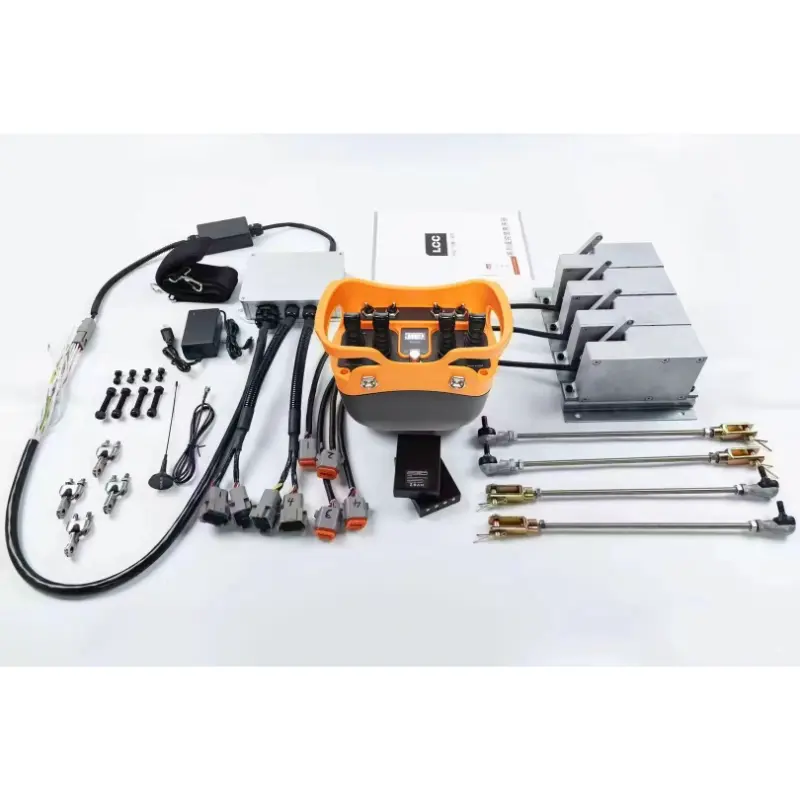
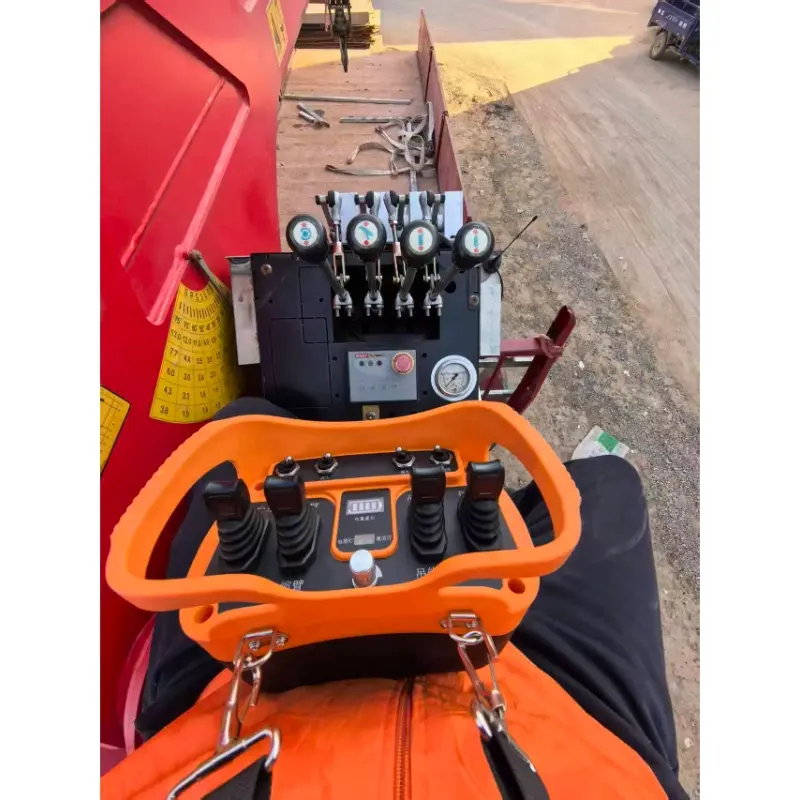
The Core Components of a Wireless Control System
To fully grasp the working principle, we must first break down the system into its primary hardware components:
The Transmitter (Tx)
This is the portable unit held by the operator. Depending on the complexity of the crane, the transmitter can be a compact push-button handheld device or a robust belly-box console equipped with multi-axis joysticks, toggle switches, and digital displays. The transmitter acts as the human-machine interface (HMI). It houses a battery pack, a microprocessor, an RF encoding module, and an internal or external antenna.
The Receiver (Rx)
Mounted firmly on the crane structure (usually inside or adjacent to the main control cabinet), the receiver is the bridge between the wireless signal and the crane’s motor drives. It contains a receiving antenna, a decoding microprocessor, and a complex array of output relays or solid-state outputs. These relays physically open and close the electrical circuits that drive the crane’s motors.
The Working Principle of Wireless Crane Remote Controls
The magic of a wireless crane remote control lies in its ability to translate a physical push of a button into the safe, precise movement of a heavy steel hook located hundreds of feet away. Here is the step-by-step breakdown of this technical symphony:
Step 1: User Input and Microprocessor Interpretation
When an operator presses a button (e.g., “Hoist Up”) or pushes a joystick forward, the physical movement closes an electrical contact inside the transmitter. The internal microprocessor instantly detects this state change.
Step 2: Signal Encoding and Encryption
Industrial environments are noisy—not just acoustically, but electromagnetically. To prevent a welding machine or a nearby radio from accidentally triggering the crane, the microprocessor translates the “Hoist Up” command into a highly complex, encrypted digital data packet. This packet includes:
- An ID Code: A unique serial number ensuring the receiver only listens to its paired transmitter.
- The Command Data: The specific action requested (speed, direction).
- A Checksum/CRC: A mathematical value used for error-checking to ensure the data packet is not corrupted in transit.
Step 3: Radio Frequency (RF) Modulation
The encoded digital packet is sent to the RF module, where it modulates a radio carrier wave. Most modern industrial remote controls operate on secure UHF/VHF frequencies (such as 433 MHz, 868 MHz, or 915 MHz, depending on regional regulations) or 2.4 GHz bands.
Step 4: Transmission via Antenna
The modulated radio wave is broadcasted outward through the transmitter’s antenna into the surrounding airspace.
Step 5: Reception and Demodulation
The receiver’s antenna, mounted high up on the crane, picks up the radio waves. The receiver’s internal RF module demodulates the analog radio wave back into a digital data packet.
Step 6: Decoding and Authentication
The receiver’s microprocessor examines the data packet. First, it verifies the ID code. If the ID code matches its own programmed memory, it proceeds; if not, it instantly rejects the signal. Next, it calculates the checksum to ensure no data was lost or altered by interference.
Step 7: Relay Activation and Execution
Once the signal is authenticated, the microprocessor triggers the specific relay corresponding to “Hoist Up.” This relay closes a high-voltage circuit, sending power to the crane’s hoist motor or signaling the Variable Frequency Drive (VFD) to begin lifting the load at the requested speed.
Remarkably, this entire seven-step process occurs in a matter of milliseconds, providing the operator with instantaneous, real-time control.
Understanding the Working Principle of Cranes in a Wireless Context
To appreciate the remote control, one must understand the machine it is operating. The fundamental working principle of cranes relies on the conversion of electrical energy into mechanical power to execute three primary motions:
- Hoisting Mechanism (Up/Down): This is the core function of the crane. An electric motor drives a gearbox, which turns a grooved drum. A heavy-duty wire rope winds or unwinds around this drum, raising or lowering the hook block and the attached load.
- Trolley Travel (Left/Right): The hoist unit is mounted on a trolley that runs along the bridge girder(s). A separate motor drives the trolley wheels, allowing the load to be positioned horizontally across the span of the crane.
- Bridge Travel (Forward/Backward): The entire bridge structure moves along parallel runway beams. Powerful end-truck motors propel the crane longitudinally down the length of the facility.
When integrated with a wireless system, the receiver’s relays interface directly with the crane’s electrical panel. For traditional contactor-controlled cranes, the wireless receiver directly energizes the contactor coils. For modern cranes utilizing Variable Frequency Drives (VFDs), the receiver sends analog signals (like 0-10V or 4-20mA) or digital communication protocols (like CANbus or Profibus) to the VFD, allowing for incredibly smooth, stepless speed control. This precise synergy between the radio system and the working principle of cranes minimizes load swing and enhances operational safety.
Wireless Control of Heavy-Duty Cranes Challenges
While a standard remote control might suffice for a small 2-ton jib crane, the wireless control of heavy-duty cranes—such as 100-ton ladle cranes in steel mills, massive gantry cranes in shipyards, or heavy-duty magnet cranes in scrap yards—requires an entirely different caliber of technology.
The Stakes are Higher
When dealing with heavy-duty cranes, the loads are massive, highly valuable, and often dangerous (e.g., molten metal). A dropped signal or a delayed response is not just an inconvenience; it is a catastrophic safety failure. Therefore, wireless systems designed for heavy-duty applications incorporate advanced fail-safes.
Advanced Frequency Hopping Spread Spectrum (FHSS)
In heavy industrial zones, RF interference is rampant. Heavy-duty wireless remotes often utilize FHSS technology. Instead of transmitting on a single static frequency, the transmitter and receiver synchronously “hop” across dozens of different frequencies multiple times per second. If one frequency is blocked by interference, the system instantly switches to a clear channel without the operator even noticing, guaranteeing an unbroken connection.
Proportional Control and Pitch-and-Catch
Heavy-duty lifting requires microscopic precision. Belly-box transmitters equipped with proportional joysticks allow operators to adjust the speed of the massive crane motors infinitely, depending on how far the joystick is pushed. Furthermore, features like “Pitch-and-Catch” allow multiple operators to control a single crane sequentially. An operator at one end of a long factory can lift a massive turbine, move it halfway down the bay, and electronically “pitch” control to a second operator waiting at the assembly point, significantly improving workflow and safety.
Two-Way Communication (Telemetry)
For heavy-duty applications, one-way communication is often insufficient. Advanced systems feature two-way RF communication. The receiver sends vital data back to the transmitter’s digital display, allowing the operator to monitor the exact weight of the suspended load, wind speed, motor temperature, and battery life directly from the remote control in real-time.
Uncompromising Safety Mechanisms in Wireless Crane Controls
Safety is the paramount concern in any material handling operation. To comply with rigorous international safety standards (such as EN ISO 13849-1 and IEC 61508), a wireless crane remote control employs multiple layers of redundant safety features:
- Active Emergency Stop (E-Stop): Every industrial remote features a prominent, red mushroom-head E-Stop button. Pressing this instantly bypasses all software, cuts the RF transmission, and forces the receiver to open the Main Line Contactor (MLC), dropping power to all crane motors immediately.
- Passive E-Stop (Watchdog Timer): The transmitter constantly sends a continuous “heartbeat” signal to the receiver, even when no buttons are pressed. If the receiver fails to hear this heartbeat for a specified duration (usually 0.5 to 2 seconds)—due to a dead battery, the operator walking out of range, or severe interference—the receiver autonomously executes a safe shutdown, stopping the crane.
- Dual Microprocessors: High-end receivers use two separate microprocessors to process incoming commands independently. Both processors must agree on the command before the output relay is activated, preventing a single hardware malfunction from causing an unintended crane movement.
- Motion Sensors (Man-Down Function): Many modern transmitters include tilt or zero-g sensors. If the transmitter is dropped, or if the operator falls, the sensor detects the anomaly and instantly sends an E-Stop command to the crane to prevent accidents.
The Business Benefits of Upgrading to Wireless Systems
The transition from wired pendants or cabin controls to wireless systems offers substantial return on investment for industrial facilities:
- Unmatched Operator Safety: Operators are no longer forced to walk directly beneath or adjacent to heavy, swaying loads. They can position themselves at the optimal vantage point, maintaining a safe distance from hazards like extreme heat, chemical splashes, or blind spots.
- Increased Productivity: Operators are not slowed down by a physical cable snagging on machinery or structural columns. They can navigate the workspace freely, leading to faster lifting cycles and improved throughput.
- Reduced Maintenance Costs: The pendant cable is often the most frequently damaged component of an overhead crane, prone to being crushed, stretched, or severed. Eliminating the cable eliminates the constant need for expensive pendant replacements and the associated machine downtime.
- Better Resource Allocation: Cabin-operated cranes require two people: an operator in the cabin and a rigger on the ground signaling the moves. A wireless system allows a single trained operator to rig the load and control the crane simultaneously, optimizing labor costs.
Conclusion
The working principle of wireless crane remote controls is a brilliant fusion of mechanical engineering, radio frequency technology, and rigorous safety protocols. By seamlessly integrating with the core working principle of cranes, these systems have transformed dangerous, labor-intensive tasks into precise, efficient, and secure operations.
As industrial automation continues to advance, especially concerning the wireless control of heavy-duty cranes, we can expect even greater innovations, such as seamless integration with Industrial Internet of Things (IIoT) platforms for predictive maintenance and automated load sway control.
Upgrading your lifting equipment with a high-quality wireless remote control is not just a modernization step; it is a critical investment in the safety of your workforce and the efficiency of your facility.
If you are looking to upgrade your facility’s lifting capabilities, explore premium, industrial-grade remote solutions that guarantee safety and precision. Learn more about advanced wireless remote control systems here to find the perfect fit for your heavy-duty lifting needs.
FAQ
Q1: Are wireless crane remote controls susceptible to hacking, signal interference, or operating the wrong crane?
A: No, modern industrial remote controls are incredibly secure. They utilize unique, mathematically generated ID codes (often with millions of possible combinations) ensuring a receiver will only ever respond to its exclusively paired transmitter. Furthermore, the use of Frequency Hopping Spread Spectrum (FHSS) technology and error-checking protocols prevents ambient RF noise or intentional interference from triggering any unauthorized crane movement. If interference becomes too high, the system defaults to a safe, shut-down state.
Q2: What happens if the remote control’s battery dies or the operator walks out of range while a load is suspended?
A: Industrial wireless systems are designed with a “fail-safe” philosophy. The transmitter continuously sends a background “heartbeat” signal. If the battery dies, or if the operator walks beyond the system’s operational range (typically 100 to 300 meters), the receiver will instantly detect the loss of this heartbeat. Within milliseconds, the receiver’s watchdog timer will trigger a passive emergency stop, automatically engaging the crane’s motor brakes and holding the suspended load securely in place.
Q3: Can a wireless remote control system be retrofitted to an older, existing overhead crane?
A: Absolutely. One of the greatest advantages of wireless crane remote controls is their backward compatibility. Whether your crane relies on older mechanical contactors or modern Variable Frequency Drives (VFDs), the wireless receiver can be wired directly into the existing electrical control panel. A qualified crane technician can usually complete the retrofit process in a few hours, instantly modernizing legacy lifting equipment without the need for extensive mechanical overhauls.