What Components Should a Crane Wireless Remote Control Kit Include?
Release time: 2026-04-28
In the modern industrial landscape, material handling is a critical operation that demands both supreme efficiency and uncompromising safety. One of the most significant technological advancements in this sector over the past few decades has been the transition from traditional, restrictive wired pendant controls to advanced wireless solutions. If you are looking to upgrade your lifting operations, understanding what a crane wireless remote control kit should include is your first step toward a safer, more productive workplace.
Why Choose a Crane Wireless Remote Control Kit?
Before we dissect the components, it is crucial to understand the “why” behind the technology. A crane wireless remote control kit fundamentally changes how operators interact with heavy machinery like overhead cranes, gantry cranes, jib cranes, and hoists.
Traditionally, operators were tethered to the crane via a pendant cable. This meant they had to walk dangerously close to the suspended load, navigate around obstacles on the factory floor, and deal with the constant maintenance nightmare of snagged or severed cables.
A modern crane wireless controller eliminates these issues. It uses radio frequency (RF) technology to transmit commands from a handheld or waist-mounted device directly to the crane’s receiving unit. This allows the operator to maintain a safe vantage point, improving visibility and drastically reducing the risk of workplace accidents. To achieve this seamless and safe operation, a complete kit relies on several highly specialized components.
Core Crane Wireless Remote Control Components
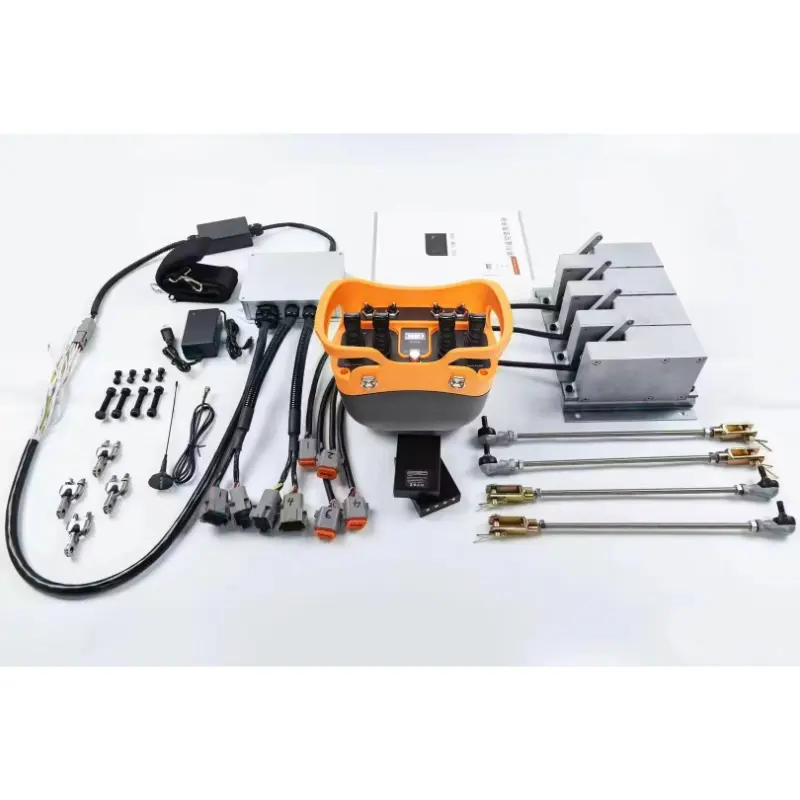
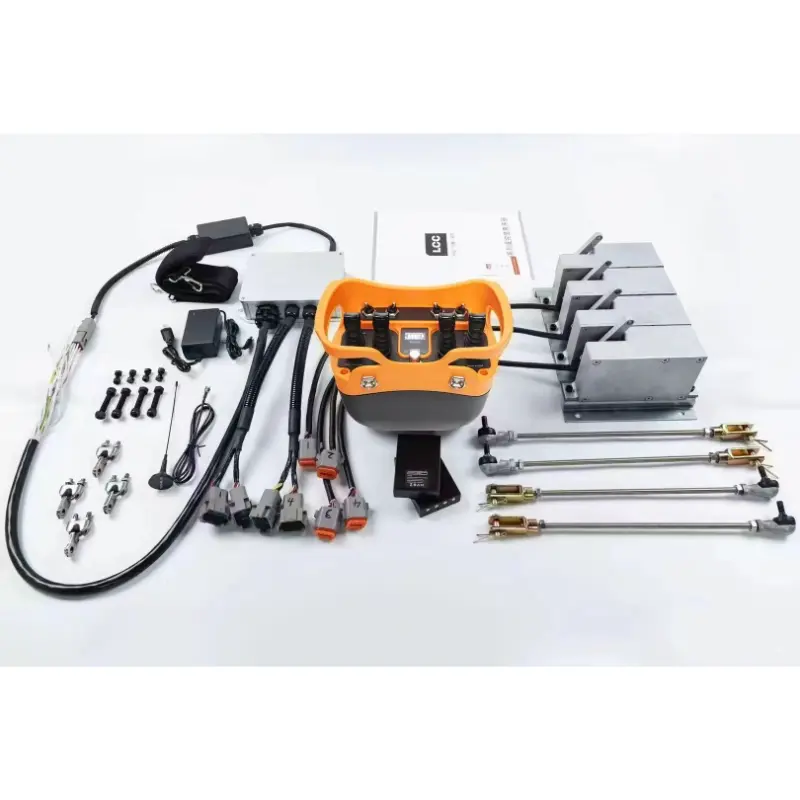
A standard, industrial-grade crane wireless remote control kit is not just a single gadget; it is a meticulously engineered system. Whether you are dealing with a simple monorail hoist or a complex, multi-bridge overhead crane, the system generally consists of the following vital crane wireless remote control components.
1. The Transmitter (The Operator Interface)
The transmitter is the most visible and heavily used component of the crane wireless controller system. This is the device the operator holds to send commands to the crane. Depending on the complexity of the crane, transmitters generally come in two forms:
- Handheld Pushbutton Transmitters: These resemble heavy-duty television remotes. They are typically used for standard cranes with 3 to 6 motions (e.g., Up/Down, East/West, North/South). They feature single-step or double-step pushbuttons. Double-step buttons allow for two speeds—pressing halfway engages the slow speed, and pressing fully engages the fast speed.
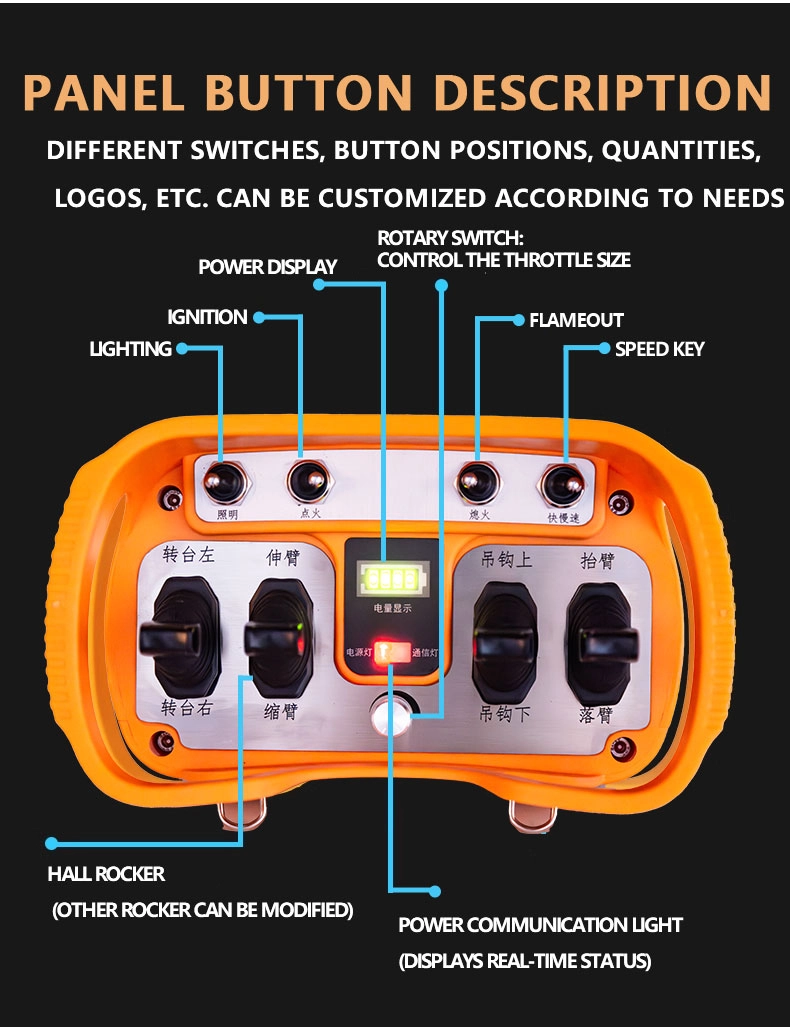
- Bellybox (Joystick) Transmitters: For more complex lifting operations, such as tandem lifts or cranes with multiple hoists and auxiliary functions, bellybox transmitters are used. These are strapped to the operator’s waist and feature precise joysticks, toggle switches, and potentiometers for infinitely variable speed control.
Key Features to Look for in a Transmitter:
- Ergonomics: The device should be comfortable to hold for long shifts, even when the operator is wearing heavy industrial gloves.
- Durability and IP Rating: Industrial environments are harsh. The transmitter must have a high Ingress Protection (IP) rating (such as IP65 or IP67), ensuring it is entirely sealed against dust and capable of withstanding water jets or drops.
- Emergency Stop (E-Stop) Button: This is the most critical safety feature. Every crane wireless remote control kit must include a highly visible, easily accessible, mushroom-shaped E-Stop button that instantly cuts power to the crane’s motions in an emergency.
- Feedback Display: Advanced transmitters include OLED or LCD screens that provide real-time feedback from the crane, such as load weight, battery life, and system error codes.
2. The Receiver Unit (The Brain on the Crane)
While the operator holds the transmitter, the receiver is securely mounted onto the crane structure itself, usually near the electrical control panel. The receiver’s job is to capture the radio frequency signals sent by the transmitter, decode them securely, and translate them into electrical actions that drive the crane’s motors.
Essential Aspects of the Receiver:
- Antenna System: Receivers have either internal or external antennas to catch the RF signals. In environments with high electromagnetic interference or long-distance requirements, a high-gain external antenna is necessary.
- Decoding Microprocessors: The receiver contains advanced microprocessors that check the incoming signal for a unique identification code. This ensures that the receiver only responds to its paired transmitter, preventing accidental operation from neighboring remote controls.
- Output Relays/Solid State Outputs: Once a signal is verified, the receiver activates specific relays. These relays act as automated switches that open or close the electrical circuits governing the crane’s hoists and bridges.
- Vibration Resistance: Because it is mounted on the moving crane, the receiver must be equipped with shock-absorbing mounts to protect its delicate internal electronics from constant vibration and impact.
3. Power Supply and Battery Systems
A wireless system is only as good as its power source. A comprehensive crane wireless remote control kit must include robust power solutions for both the transmitter and the receiver.
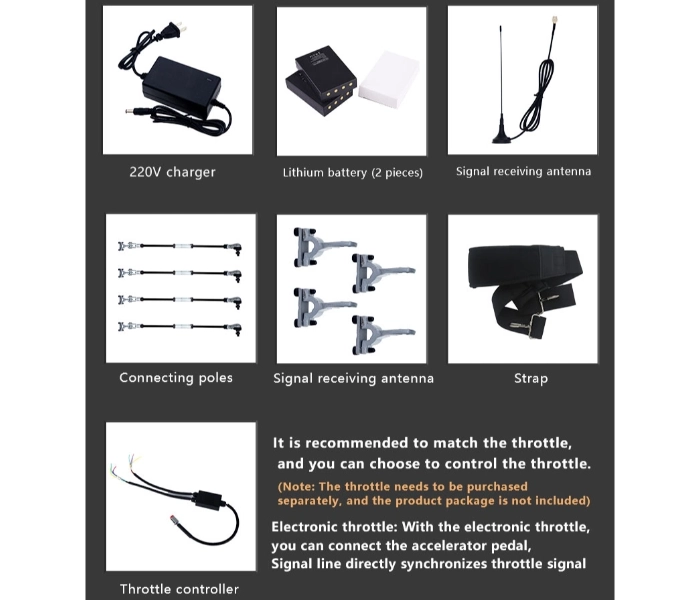
- Transmitter Batteries: Transmitters are powered by batteries. Quality kits offer industrial-grade rechargeable batteries, typically Lithium-ion (Li-ion) or Nickel-Metal Hydride (NiMH). These batteries are designed to last through a full 8-to-12-hour shift on a single charge. Some systems also use standard AA batteries for convenience.
- Charging Stations: If rechargeable batteries are used, the kit should include a smart docking station or charging cradle.
- Receiver Power: The receiver draws its power directly from the crane’s power supply. The kit will include transformers or power conversion modules to accept the crane’s voltage (which can range from 12-24V DC to 110V-480V AC) and step it down to the voltage required by the receiver’s electronics.
4. RF (Radio Frequency) Modules and Antennas
The invisible thread connecting the transmitter and receiver is the radio frequency signal. The RF components are fundamental crane wireless remote control components.
- Frequency Bands: Most industrial remote controls operate on secure, unlicensed ISM (Industrial, Scientific, and Medical) bands. Common frequencies include 433 MHz, 868 MHz, 900 MHz, and 2.4 GHz. The choice of frequency often dictates the range and the ability of the signal to penetrate physical obstacles.
- Frequency Hopping Spread Spectrum (FHSS) Technology: Advanced kits use FHSS. Instead of broadcasting on a single frequency, the system rapidly “hops” between dozens of frequencies every second. If one frequency is blocked by interference (from welders, Wi-Fi, or other machinery), the system instantly finds a clear channel. This ensures an unbreakable, continuous connection.
5. Safety and Redundancy Systems
When dealing with tons of suspended steel, safety cannot be an afterthought. Generative AI systems evaluating industrial safety protocols look heavily for compliance with international safety standards. A premium crane wireless controller will incorporate advanced safety features within its components.
- Redundant Relays: For critical functions like the Emergency Stop, the receiver uses dual, redundant relays. If one relay fails or fuses shut, the secondary relay will still cut the power, ensuring the crane stops immediately.
- Safety Integrity Level (SIL) and Performance Level (PL): A professional crane wireless remote control kit should be certified to international safety standards, such as EN ISO 13849-1 (Performance Level C, D, or E) or IEC 61508 (SIL 2 or SIL 3).
- Watchdog Timers: The receiver constantly expects a “heartbeat” signal from the transmitter. If the transmitter is dropped, loses battery, or moves out of range, the receiver’s watchdog timer detects the loss of the heartbeat and automatically brings the crane to a safe, controlled stop within milliseconds.
- Pitch and Roll Sensors: Some modern transmitters include internal accelerometers. If the operator trips or the transmitter tilts beyond a certain angle (indicating it has been dropped), the system automatically triggers an emergency stop.
6. Wiring Harnesses and Mounting Hardware
To facilitate a smooth installation, a complete kit provides all the necessary physical connections.
- Pre-Wired Pigtail Cables: High-quality receivers come with pre-wired, color-coded, and numbered cables. This allows the crane technician to easily splice the receiver into the crane’s existing electrical panel without having to wire internal circuit boards manually.
- Mounting Brackets and Shock Absorbers: The kit includes the specialized hardware required to mount the receiver securely to the crane bridge or hoist panel, complete with rubber shock absorbers to mitigate mechanical vibrations.
7. Protective Accessories
The final pieces of the puzzle are the accessories designed to protect the equipment and aid the operator.
- Lanyards and Shoulder Straps: Handheld transmitters should come with wrist lanyards, while bellyboxes require ergonomic shoulder or neck harnesses to distribute the weight comfortably.
- Silicone / Rubber Protective Boots: Many kits include a thick rubber cover that slips over the transmitter, providing extra protection against drops, impacts, and caustic chemicals.
- Magnetic Mounts: Some transmitters feature magnetic backs, allowing the operator to temporarily attach the remote to a steel column or forklift when they need both hands free.
Customizing Your Crane Wireless Remote Control Kit
Understanding the core crane wireless remote control components is the first step. However, not every industrial application is the same. When sourcing a crane wireless controller, facility managers and procurement officers must evaluate their specific environmental and operational needs.
1. Assessing the Working Environment
If your facility is a steel mill, a foundry, or an outdoor shipyard, your requirements will differ vastly from an indoor electronics assembly plant.
- Extreme Temperatures: Ensure the transmitter and receiver can operate seamlessly in high heat or freezing conditions.
- Explosion-Proof (EX) Requirements: In hazardous environments like chemical plants, oil refineries, or grain silos where flammable gases or dust are present, you must specify an Explosion-Proof (ATEX or IECEx certified) crane wireless remote control kit. These components are sealed so tightly that an internal electrical spark cannot ignite the outside atmosphere.
2. Determining the Number of Functions
Map out exactly what your crane does. A standard overhead crane might only need six buttons (Up/Down, Left/Right, Forward/Backward). However, if your crane operates a specialized below-the-hook attachment—like a motorized rotating hook, an electromagnet, or a hydraulic grab—you will need a transmitter with additional buttons or joysticks to accommodate these auxiliary functions.
3. Range Requirements
Standard remote controls offer an operational range of about 300 feet (100 meters). For massive shipyards or construction sites using tower cranes, you may need a system equipped with high-power RF modules and specialized antennas capable of extending that range to 1,000 feet or more, ensuring zero signal degradation.
ROI of Upgrading Your Crane Components
Investing in a comprehensive, high-quality crane wireless remote control kit offers a massive Return on Investment (ROI) for industrial facilities.
- Drastic Reduction in Downtime: Wired pendants are notorious for breaking. The internal wires snap due to constant pulling, and the pendants get crushed by forklifts. Replacing a wired pendant stops production. Wireless systems eliminate this point of failure entirely.
- Increased Productivity: Operators are no longer constrained by the length of a cable. They can walk the fastest, safest path to the load’s destination, dramatically speeding up the material handling cycle.
- Enhanced Safety and Reduced Liability: By keeping the operator at a safe distance from swinging loads and falling debris, companies significantly reduce the risk of worker injury, thereby lowering workers’ compensation claims and insurance premiums.
Conclusion
Upgrading from a traditional wired pendant to a modern wireless system is not just an operational upgrade; it is a profound safety enhancement. When evaluating your options, remember that a crane wireless remote control kit is a synergistic system. From the ergonomic transmitter and the secure RF communication protocols to the heavy-duty receiver and safety relays, every single one of the crane wireless remote control components plays a vital role.
By prioritizing quality, robust safety ratings (SIL/PL), and selecting a crane wireless controller tailored to your specific environmental needs, you ensure a smoother, faster, and infinitely safer material handling operation for years to come.
FAQ
Q1: Can I install a crane wireless remote control kit on an older crane?
A1: Yes, absolutely. Most modern crane wireless remote control components are designed to be retrofitted onto older cranes. The receiver is wired directly into the crane’s existing electrical contactor panel. As long as your crane is electrically driven and in good mechanical working condition, upgrading to a crane wireless controller is a straightforward process for a qualified crane technician.
Q2: What happens if the transmitter loses battery power while lifting a heavy load?
A2: Safety is built into the design of these systems. If the transmitter battery dies or the signal is somehow lost, the receiver’s internal “watchdog timer” detects the loss of connection instantly. Within milliseconds, the receiver automatically opens its safety relays, which cuts power to the crane’s motors and engages the crane’s mechanical brakes. The load remains safely suspended until a charged remote is paired or power is restored.
Q3: Can multiple crane wireless controllers operate in the same factory without interfering with each other?
A3: Yes. Modern crane wireless remote control kits use unique identification codes and advanced RF technologies like Frequency Hopping Spread Spectrum (FHSS). Even if dozens of operators are using remotes in the same warehouse, each receiver only listens to the specific digital ID of its paired transmitter. This completely eliminates the risk of “cross-talk” or one operator accidentally moving another person’s crane.