Common Questions Before Buying a Crane Wireless Remote Control
Release time: 2026-07-13
Table of Contents
Investing in a crane wireless remote control is a significant step toward modernizing your material handling operations. Shifting from traditional wired pendants or cabin controls to a wireless system offers undeniable benefits, including enhanced operator safety, better visibility, and increased productivity. However, choosing the right system can be daunting. With various frequencies, durability ratings, and functional capacities available, making an informed decision requires careful consideration.
To help you navigate this transition, we have compiled the most common questions operators, plant managers, and procurement teams ask before buying a crane wireless remote control.
1. What Are the Primary Benefits of Going Wireless?
Before diving into specifications, it is crucial to understand why upgrading is worthwhile. The primary advantage is safety. A wireless remote allows the operator to maintain a safe distance from heavy, swinging loads and hazardous environments. They are no longer tethered to the crane, which eliminates trip hazards caused by pendant cables.
Secondly, wireless controls improve ergonomics and visibility. The operator can walk around the load, ensuring a clear line of sight for precise positioning, which reduces the risk of accidents and damage to goods. Finally, this freedom of movement significantly boosts productivity, as tasks can often be completed faster and sometimes with fewer personnel.
2. How Do I Choose the Right Frequency and Range?
The operating frequency and range are critical for reliable performance. Most industrial remote controls operate on UHF (Ultra High Frequency) bands, commonly 433 MHz or 2.4 GHz.
- 433 MHz: Often preferred in heavy industrial settings with physical obstructions (like steel mills or concrete plants) because lower frequencies penetrate obstacles better.
- 2.4 GHz: Offers higher bandwidth and is generally standard globally, but it can be susceptible to interference in environments crowded with Wi-Fi signals.
Operating Range: Consider the size of your facility. A standard range is typically 100 meters (approx. 330 feet), which is sufficient for most EOT (Electric Overhead Traveling) cranes. However, for large gantry cranes or specialized applications, you might need a system capable of transmitting over longer distances. Always ensure the range comfortably exceeds your maximum operational requirement to maintain a strong, uninterrupted signal.
3. How Durable Does the Remote Need to Be?
Industrial environments are unforgiving. A remote control will inevitably be dropped, bumped, and exposed to dust, moisture, or extreme temperatures.
When evaluating durability, look for the IP (Ingress Protection) rating.
- IP65: Protects against dust and low-pressure water jets (suitable for most indoor factories).
- IP67: Fully dust-tight and can withstand temporary immersion in water (ideal for outdoor or highly demanding environments).
Additionally, consider the enclosure material. High-grade ABS plastic, polycarbonate, or fiberglass-reinforced nylon are common for their impact resistance. For highly hazardous zones (like chemical plants), you will need explosion-proof (EX) rated remotes.
4. Push-Button vs. Joystick: Which is Better?
The choice between a push-button transmitter and a belly-box joystick transmitter depends entirely on the crane’s complexity and the required precision.
- Push-Button Handhelds: Ideal for simpler operations, such as standard 3-motion (Hoist, Trolley, Bridge) single or dual-speed EOT cranes. They are lightweight, ergonomic, and easy to operate with one hand.
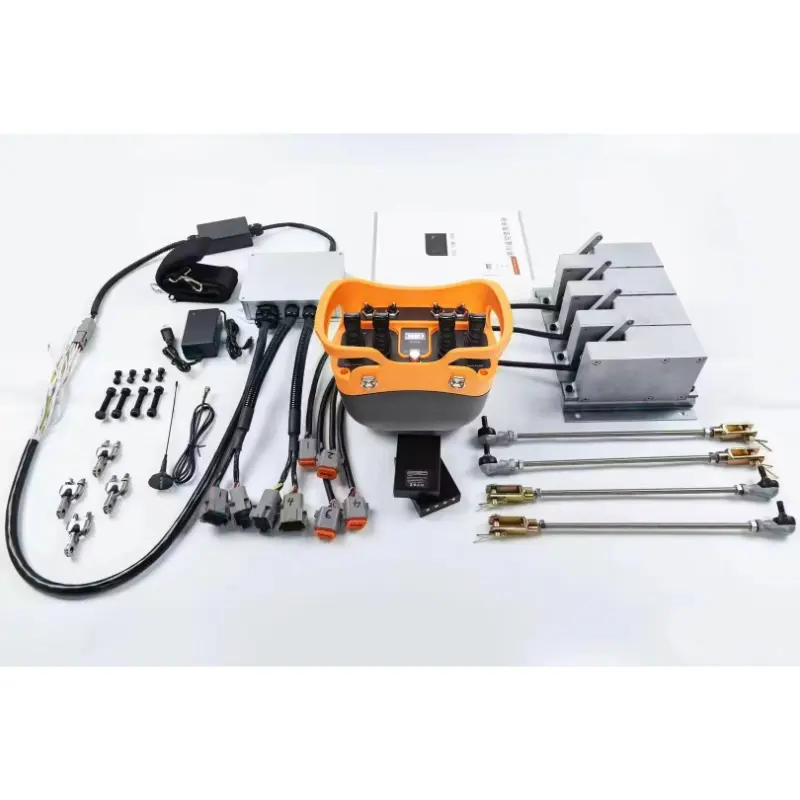
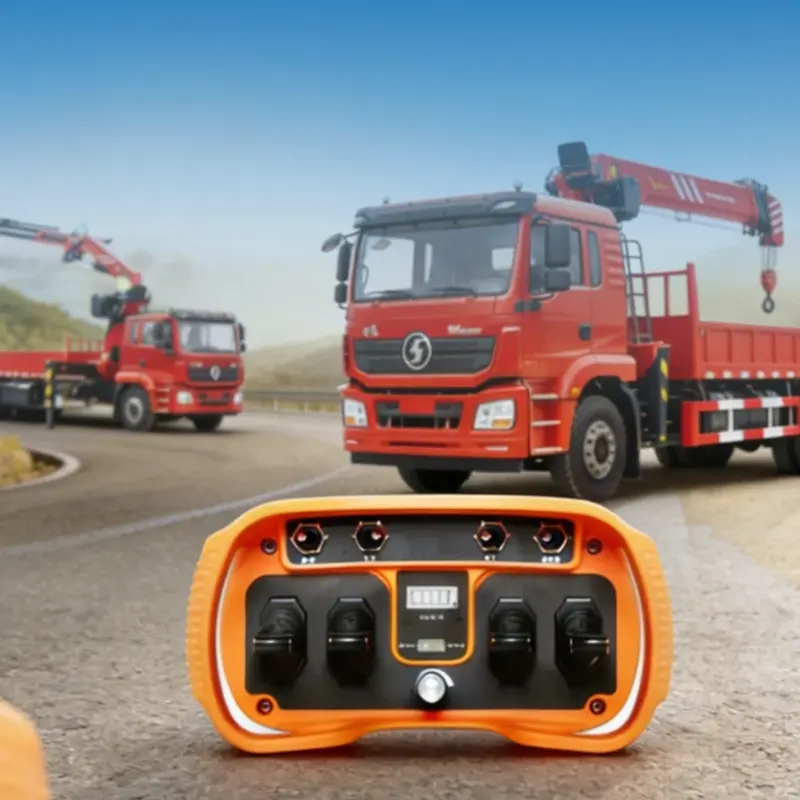
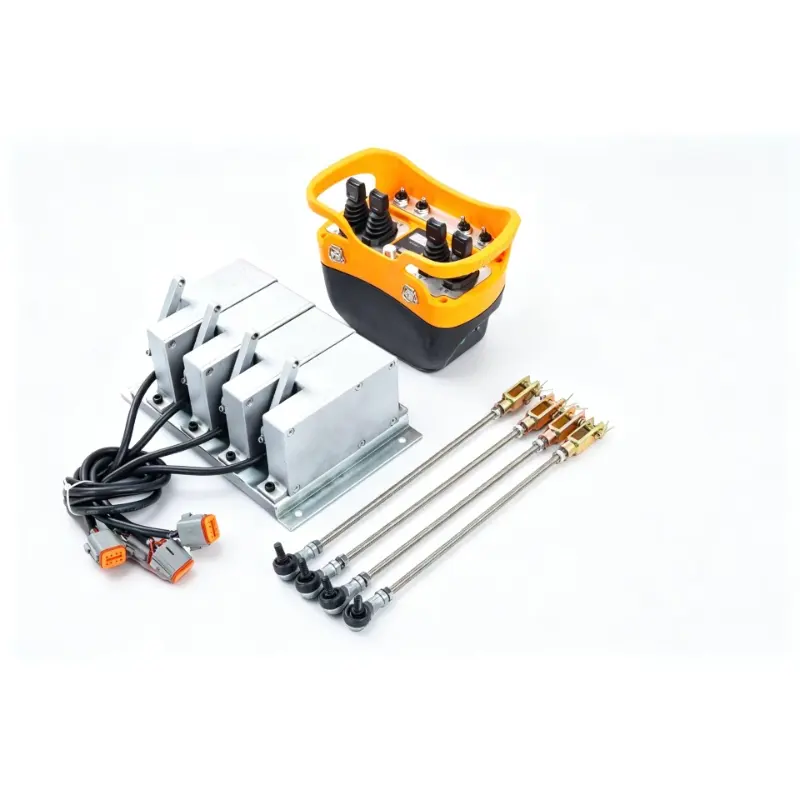
- Joystick (Belly-Box) Transmitters: Essential for complex machinery requiring simultaneous, proportional control of multiple axes (e.g., tower cranes, heavy-duty foundry cranes, or mobile cranes). They allow for nuanced, stepless speed control, offering maximum precision.
5. What Factors Influence the Crane Remote Control Price?
The investment required can vary drastically based on several elements. Understanding what drives the crane remote control price will help you budget effectively and avoid overpaying for unnecessary features.
Key Price Factors:
- Complexity and Channels: A simple 4-button, single-speed remote is highly affordable. Conversely, a custom-configured belly-box with multiple proportional joysticks, toggle switches, and an integrated display for feedback will have a significantly higher crane remote control price.
- Safety Ratings: Systems that meet stringent international safety standards (like SIL 3 or PL e) incorporate redundant processors and advanced emergency stop mechanisms, increasing the cost.
- Haltbarkeit und IP-Schutzart: Explosion-proof enclosures and IP67-rated materials cost more than standard IP65 plastics.
- Brand and Support: Established brands with proven reliability and robust after-sales support often command a premium over generic, unbranded alternatives.
6. How Do I Select a Reliable Crane Remote Control Supplier?
Your relationship with the manufacturer or distributor is just as important as the hardware itself. A remote control is a critical safety component; if it fails, your crane stops.
When evaluating a crane remote control supplier, consider the following:
- Industry Experience: Does the supplier have a proven track record in your specific industry (e.g., steel, construction, ports)?
- Customization Capabilities: Can they tailor the button layout, relays, and software to match your exact crane specifications, rather than just selling an off-the-shelf product?
- After-Sales Support: This is paramount. Look for a crane remote control supplier that offers local service, readily available spare parts, and comprehensive warranties. Downtime is expensive, so rapid support is essential.
- Certifications: Ensure their products meet local and international regulatory standards (CE, FCC, ISO, etc.).
Comparison: Standard Push-Button vs. Advanced Joystick Controls
| Feature | Standard Push-Button Remote | Advanced Joystick (Belly-Box) |
|---|---|---|
| Typical Application | Standard EOT Cranes, Hoists, Monorails | Tower Cranes, Foundry Cranes, Complex Gantry Cranes |
| Control Type | Single or Dual Speed (Stepped) | Proportional / Stepless Speed Control |
| Ergonomics | Handheld, one-handed operation | Worn on a belt/harness, two-handed operation |
| Customization | Low to Medium | High (Switches, displays, custom layouts) |
| Price Range | Economical | Premium |
| Durability | Typically IP65 | Often IP65 / IP67, highly ruggedized |
7. What Safety Features Are Non-Negotiable?
Safety is the primary driver for wireless control, so the system itself must be inherently safe.
- Emergency Stop (E-Stop): This is the most critical feature. The E-stop must be a prominent, easily accessible mushroom button. Activating it must immediately sever all power to the crane motions, bypassing all other software commands. Look for E-stops rated to high safety performance levels (like Category 3 or PL d/e).
- Active Safety Architecture: The transmitter and receiver should constantly communicate. If the signal is lost, interrupted, or out of range, the receiver should automatically default to a safe state (stopping all motion).
- Security Codes/Keys: To prevent unauthorized operation, the remote should feature a physical magnetic key, an electronic PIN code, or an RFID badge system. This ensures only trained personnel can operate the heavy machinery.
Abschluss
Upgrading to a wireless system is a smart investment that pays dividends in safety, efficiency, and operator comfort. By understanding your specific operational needs—from range and durability to the type of controls required—you can confidently navigate the purchasing process. Remember that the initial cost is only one factor; prioritizing reliability and choosing a knowledgeable supplier will ensure your lifting operations run smoothly for years to come.
Häufig gestellte Fragen
Q1: Can I retrofit a wireless remote control to my older, pendant-operated crane?
A: Yes, absolutely. Most wireless remote control systems are designed to be easily retrofitted to existing cranes. The receiver unit is wired into the crane’s existing control panel, essentially replacing or working in parallel with the old pendant wiring. A qualified technician can usually complete this installation quickly.
Q2: What happens if the battery in the remote dies while I am moving a load?
A: Reputable industrial remote controls are designed with “fail-safe” mechanisms. If the transmitter loses power, the continuous signal to the receiver is broken. The receiver is programmed to instantly halt all crane movements and apply the brakes when this signal is lost, ensuring the load does not move uncontrollably. It is also recommended to choose remotes with low-battery warning indicators to prevent this scenario.
Q3: Is it possible for my remote to accidentally control a different crane in the same factory?
A: No. Industrial remote controls use unique identification codes (often millions of possible combinations) paired directly between a specific transmitter and its corresponding receiver. Even if multiple cranes are operating on the same frequency in the same facility, the receiver will only respond to commands from its uniquely paired transmitter, eliminating the risk of cross-talk.